The Most Important GAP in Your Bag

A few months ago I made a big decision: my 4-iron was fired! It just wasn’t doing the job well enough for me anymore, and I know I’m not alone in wrestling with that choice. Plenty of you tell me the same thing on the lesson tee.

Today I want to share exactly how I went about filling that critical gap and what you should be looking for in your own bag.

In my setup, the 5-iron is now my longest iron. It carries the ball a solid, predictable distance. The club that follows it needs to deliver 8 to 12 yards more carry – but here’s the really important part – with the right trajectory.

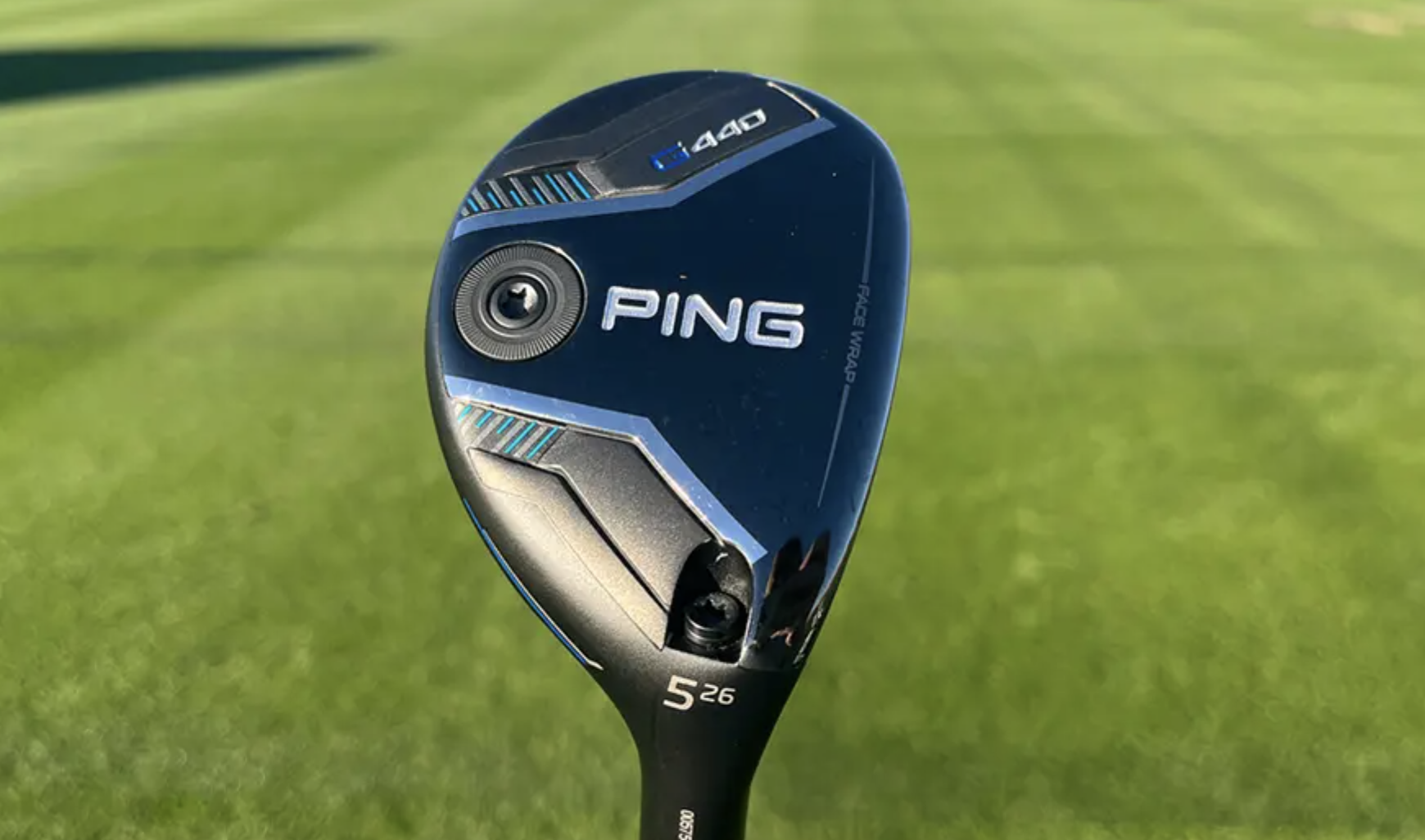
I spent time testing 9-woods, 7-woods, different hybrids, and various lofts and settings. The winner for me turned out to be my new PING G440 5-hybrid set at a standard 26°. It gives me right around 10 extra yards of carry (195 total) with a beautiful, easy-to-launch flight. Getting the ball up in the air is now straightforward, something I was struggling with using the old 4-iron.

What Should You Be Looking For?

Go out to the range or the course with a specific yardage gap in mind. You’re hunting for a club that:

  • Delivers that 8–12 yard carry advantage over your longest iron

  • Produces a landing angle north of 40° (this is key for stopping power and control)

If you can check those two boxes, you’ve found a winner.

It doesn’t have to be a 5-hybrid. If your longest iron is a 6-iron, maybe a 7-wood or 9-wood is the perfect fit. The important thing is bridging that gap correctly instead of leaving a yardage hole that forces you into awkward, low-percentage shots.
Most golfers I see don’t give this enough attention. They either keep struggling with a long iron they don’t trust or jump straight into a hybrid/wood that flies too low or too far and creates overlap with the next club. Get this one right and your bag flows much more naturally from iron to hybrid/wood territory.

I’m absolutely loving my new 5-hybrid right now – it’s doing a fabulous job and has made the game more enjoyable on those longer approach shots. If you’ve been wrestling with the same decision, I hope this gives you a clear game plan.

Go test some options with your yardage and trajectory goals in mind. You’ll be glad you did.

Thanks for reading, and as always, I hope this helps you play better and enjoy the game even more.

Andrew Rice
 

Saving Strokes with Science

With so many limits and restrictions being placed on golf club manufacturers these days it's amazing to see what really smart people can do, within the legal lines, to help us save strokes. This is a prime example from the engineers at Ping. Watch...

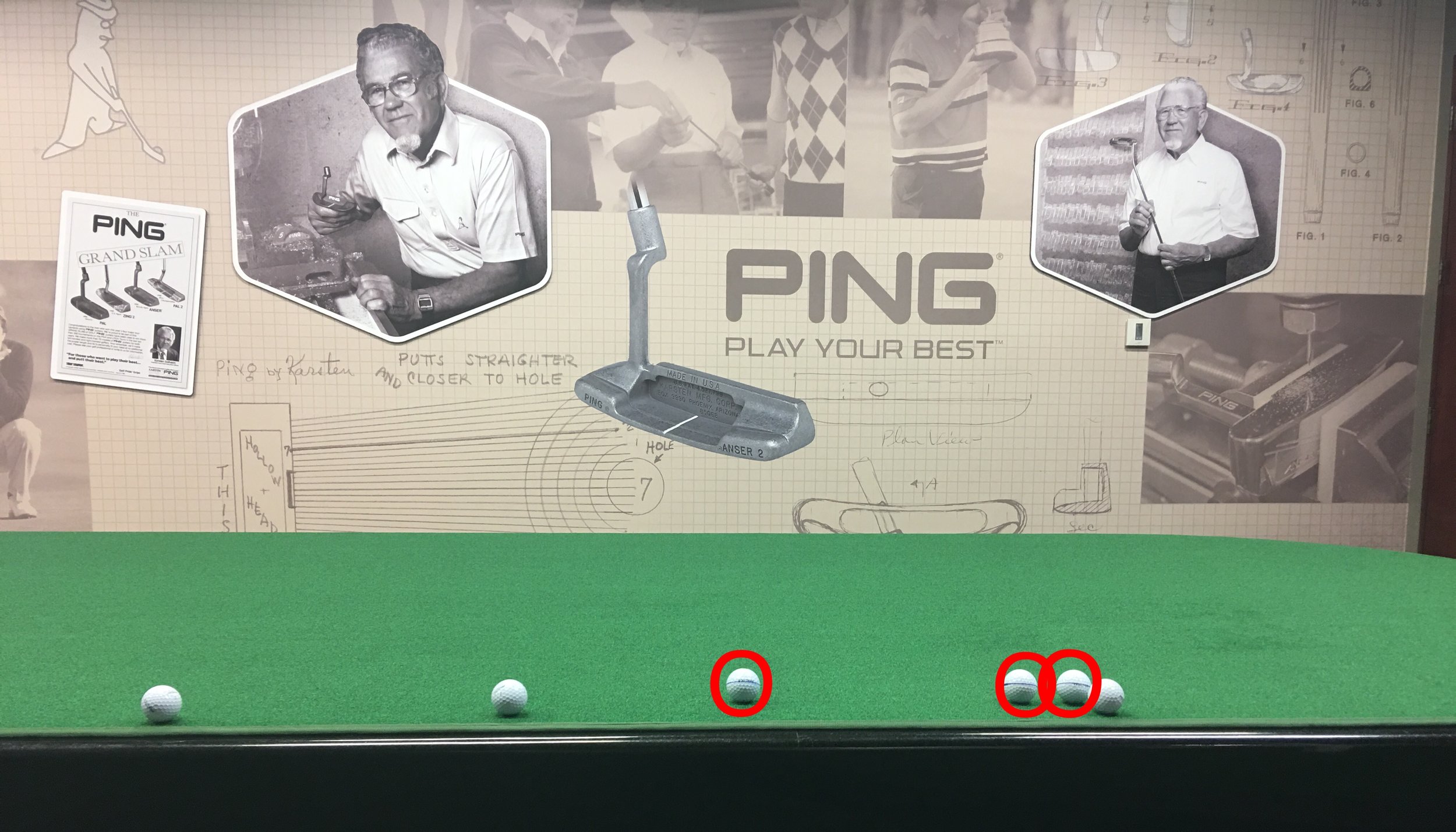
What the people at Ping found was that the depth of the grooves on the face of a putter played a tangible role in determining ball speed and thus how far the ball travelled off the face. They also knew that off-center strikes tended to travel shorter, so they used the groove depth to actually help maintain the intended ball speeds on off-center strikes.

All of the six balls pictured above were struck with a putting robot and the exact same stroke. The three circled/striped balls were hit with a variable depth grooved putter, with one being hit out the center, another 0.75" out the heel and the other 0.75" out the toe. The three non-circled balls were struck in the same fashion, but they did not have the advantage of the variable depth grooves. Notice the massive difference in dispersion!

We all hit off-center putts. We all despise three putts. The answer seems pretty simple to me! Please know, this is not a sales pitch for Ping putters, but before you go out and buy your next golf club learn about the science behind the design.

Thanks for reading.

Spinning the Wedges - Friction

The kingpin when it comes to generating spin is friction. You can have everything set up perfectly to create huge backspin, but if you don't have friction it's not going to happen. Now keep in mind friction is a big piece of the puzzle, but it's still only a piece of the puzzle.

Simply put, you can elevate friction between the clubface and the cover of the ball by eliminating any matter that could possibly get trapped between the two. The questions are how do we do this and what do we have control over?

Friction is primarily influenced by two factors - equipment and matter. Matter is anything that might get caught between the face and the ball. Let's have a look at what we can do...

Items we can control:

  • The quality of the wedges we use. If you're looking to generate more spin you simply must use what I refer to as 'professional grade' wedges that are NOT an extension of your set.
  • Play with a premium ball as it will make a tangible difference in the amount of spin you can generate. And premium is code for EXPENSIVE. Spend the money and you'll be rewarded.
  • Replace worn out wedges and please stop using your great-grandfathers Spalding wedge - there is not a hint of a groove left. Grooves don't make as much difference as you might think (off the fairway) but remember that we're looking to increase spin here.
  • When practicing, and especially when playing, make sure your equipment is clean and the face is dry. Moisture or what I call 'green slime' built up on the face will make it almost impossible to hit a high spin pitch.
  • Left over sand from an earlier bunker shot has been known to increase the friction between the face and the ball. As a result I never clean my club after playing a sand shot - the next time I use that club I might need a low spinner.

Items we cannot control:

  • Don't tell anybody, but sometimes from a perfect lie in the fairway matter (moisture, grass or dirt) will still get trapped between the face and the ball. That's due to the fact that the sole of the club will almost always contact the ground before the ball (shhh!). Yes, even on those perfectly nipped ones! When the club contacts the grass it can sometimes kick up blades and that will interrupt grip between the face and the ball.
  • Dewy mornings. If you're playing early in the AM the grass is often wet and there's nothing you can do about it. Your pitches and chips will always launch higher and spin less when water is reducing grip.
  • Lies in the rough. Keep the ball in the fairway and you'll be able to spin it more. That's an easy one.

Thanks for checking in and keep an eye out for my next episode in this series on Spinning the Wedges when I talk about Spin Loft.

Catch up on my introduction to Spinning the Wedges HERE

This free website's biggest source of support is when you decide to call to book a lesson or golf school. You can contact me HERE. If you live in another state or country please consider making a purchase HERE or HERE. It will help your game and it will help me to keep adding to this free website. Thanks again for your support! Andrew.